
Human Flesh
4K video installation, stereo sound, 16 min.
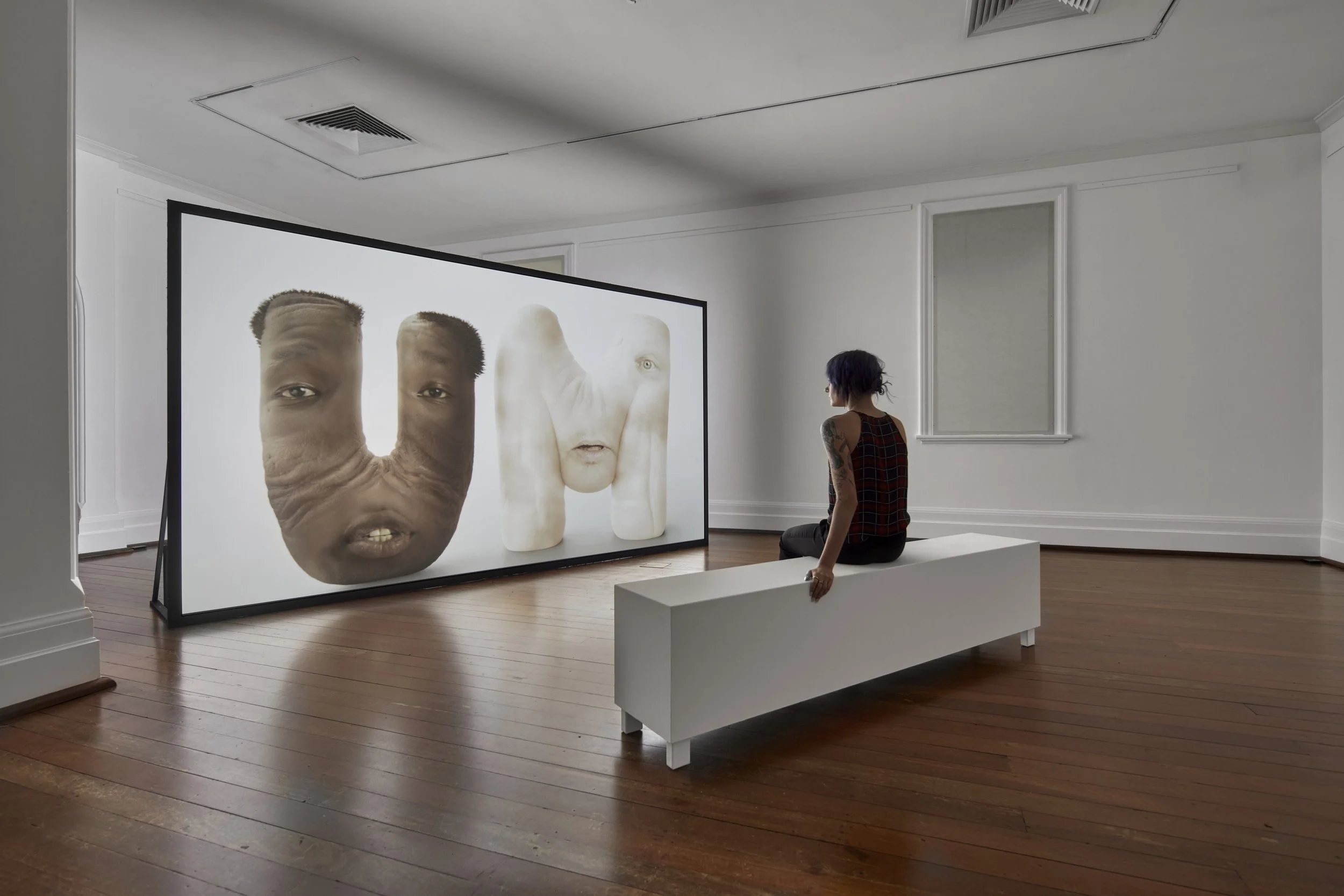
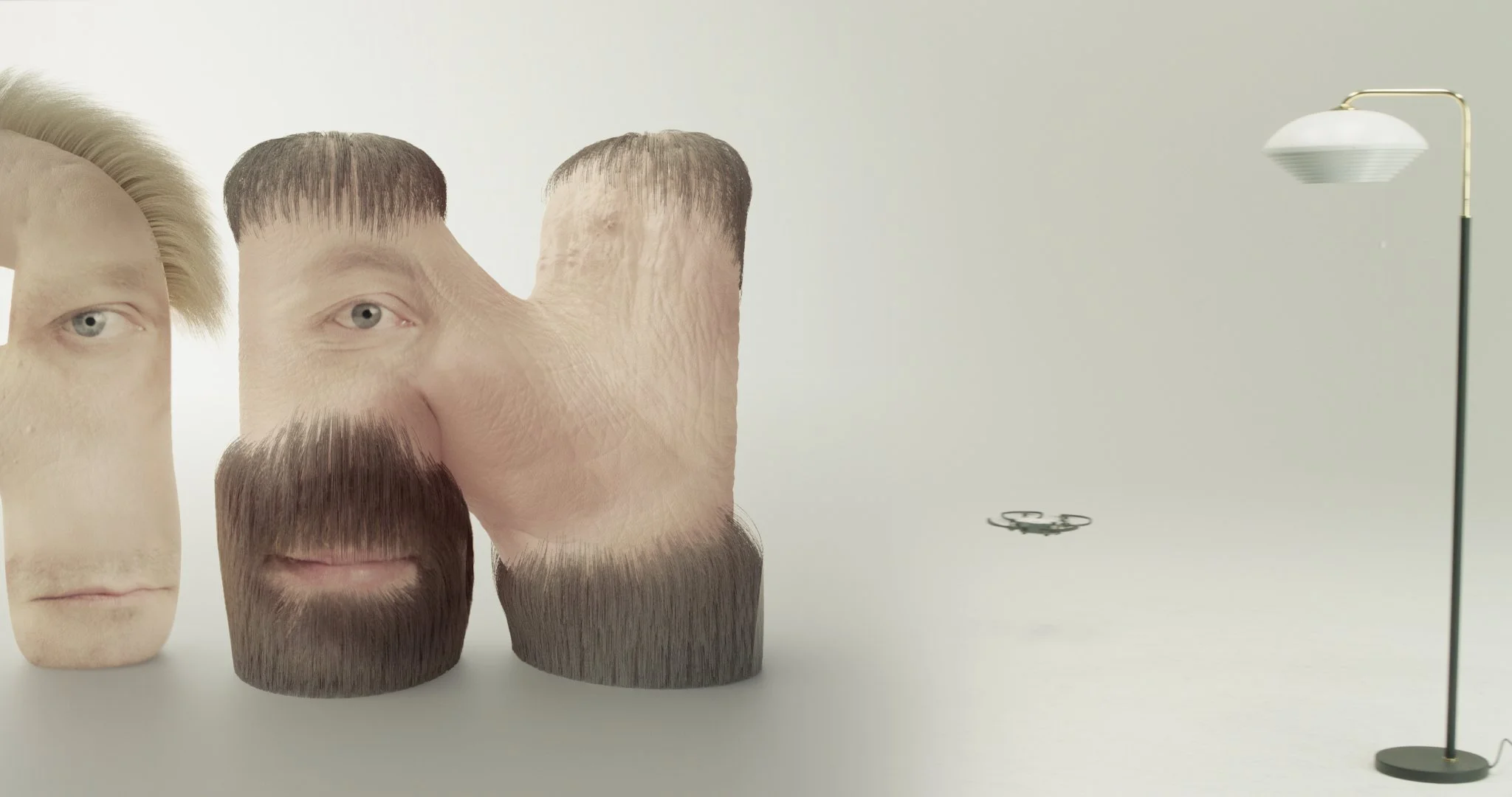
“In this 16-minute video, a set of fleshy, anthropomorphic, computer-generated typographic figures spell words in a studio-like, minimal, and sterile setting. Each letter of the title “Human Flesh” is restricted to compulsively spelling only words that begin with the letter it embodies, and the letters are given human voices (improvised by real actors).
The work activates a claustrophobic feeling, as if real human bodies were trapped within these typographic figures, their expressive abilities shrunken and exhausted. The deconstructed semiotic structure and patterns of the work bring to mind the Dadaist sound poetry of Hugo Ball and Kurt Schwitters.
Radically anti-representationalist and performative, Ruscica explores the transmission of meaning by distancing themself from conventional semantics and reveals how meaning is always mediated and contingent. Representationalism here is the belief that the knower and the known are two independent entities, and that knowledge or representation functions as a mediator between them.
This divide converts matters of representation into matters of fact, thereby concealing that knowledge and representation are always embodied, filtered, and mediated. Acknowledging this mediation paves the way for a performative reading that foregrounds how meaning and bodies are continuously enacted.
Barad offers insight into this notion of performativity:
“A performative understanding of discursive practices challenges the representationalist belief in the power of words to represent preexisting things. Performativity, properly construed, is not an invitation to turn everything (including material bodies) into words; on the contrary, performativity is precisely a contestation of the excessive power granted to language to determine what is real.” (Barad, K. 2007)
In Human Flesh, Ruscica uses a humorous and absurdist strategy to turn material bodies into words. As these word-bodies stutter and falter, the work undermines the apparent transparency of language, allowing absurd and contingent logic to progressively supplant conventional, normative ways of sense-making. Human Flesh insists on the visibility of the linguistic and discursive practices that construct the body as a bio-discursive formation.”
excerpt from ‘On Being-With the World: Relational Curating as Practice’ written by Shohreh Shakoory
documentation 1: exhibition view from ‘BODIED’ Art Gallery of Western Australia, Perth
documentation 2: Jussi Tiainen, exhibition view from ‘Jani Ruscica - Human Flesh’ Galerie Anhava, Helsinki