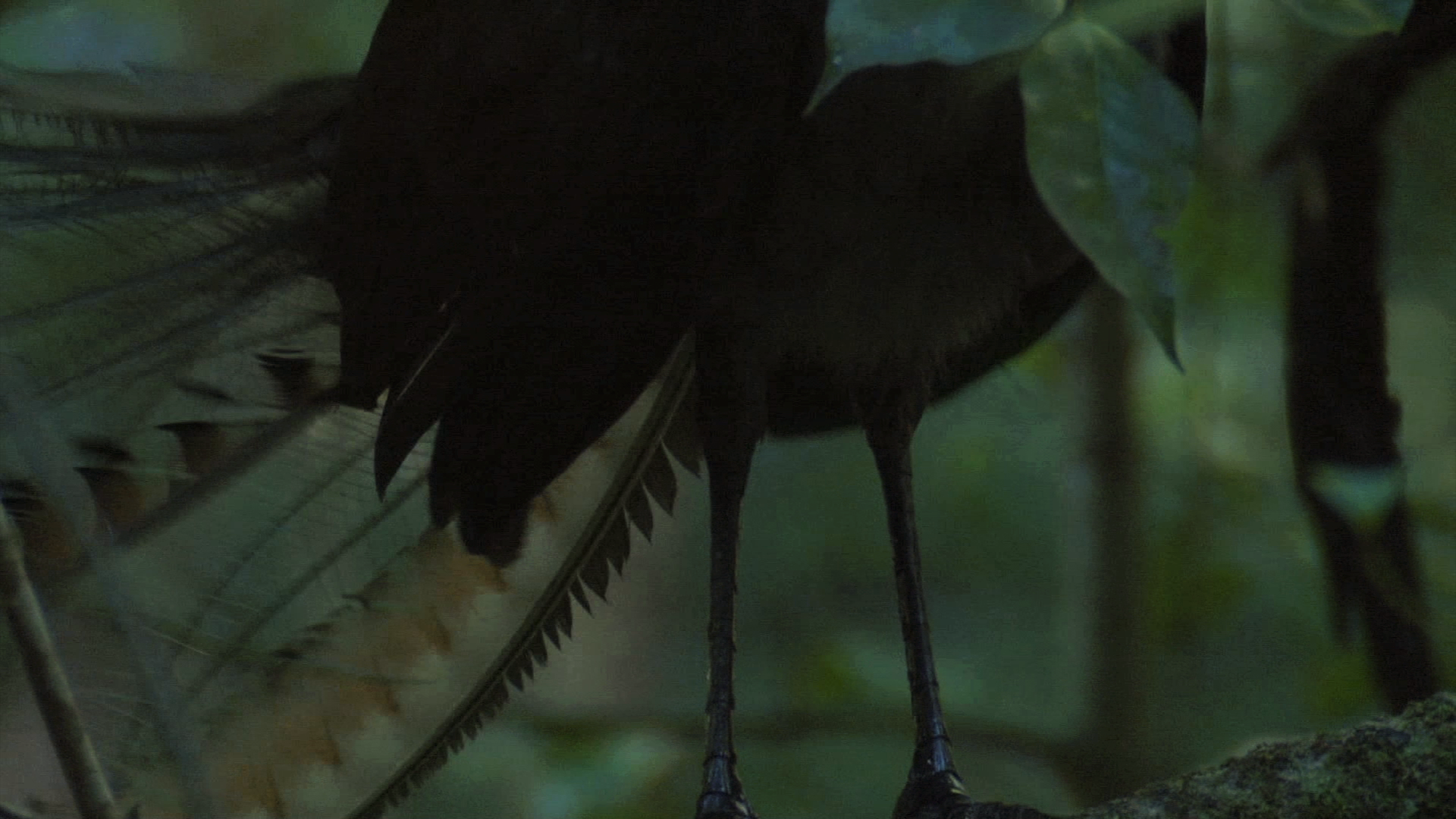
Ring tone (en plein air)
video, 1min. 45sec loop, stereo sound
“A word of similar appearance with two different meanings, either a musical instrument or a bird. It is unclear which gave its name to which. When I think of a ’lyre’, am I thinking of a shape or a sound?
The lyrebird is known for its ability to mimic perfectly the different sounds of its surroundings, not just the calls of other birds but also the ring tone of a mobile phone or the sound of a chain saw. The bird has the leading role in Jani Ruscica’s video piece Ring Tone (en plein air), showing examples of its skills. But the lyrebird does not actually appear in the piece. It features a detailed 3D animation of the bird based on nature documentaries – an imitation, a representation of reality. Even the famous sound of the bird heard in the work is a mix of recordings by bird watchers and artificial sound effects.
Ruscica’s works are dense skeins of meanings containing enigmatic references both to and beyond themselves. They explore the construction of meanings through images, words, objects and other signs, often containing a performative element as well. The works delve into semiotic interstices of a kind where the object of representation and how it is represented question one another, revealing gaps between relations of meaning or their nodes. The works are often places at the intersections of art forms, prompting the subject to be interpreted through the different media. In doing so, they test which features and meanings will survive and what will be lost when moving from one form of representation to another.
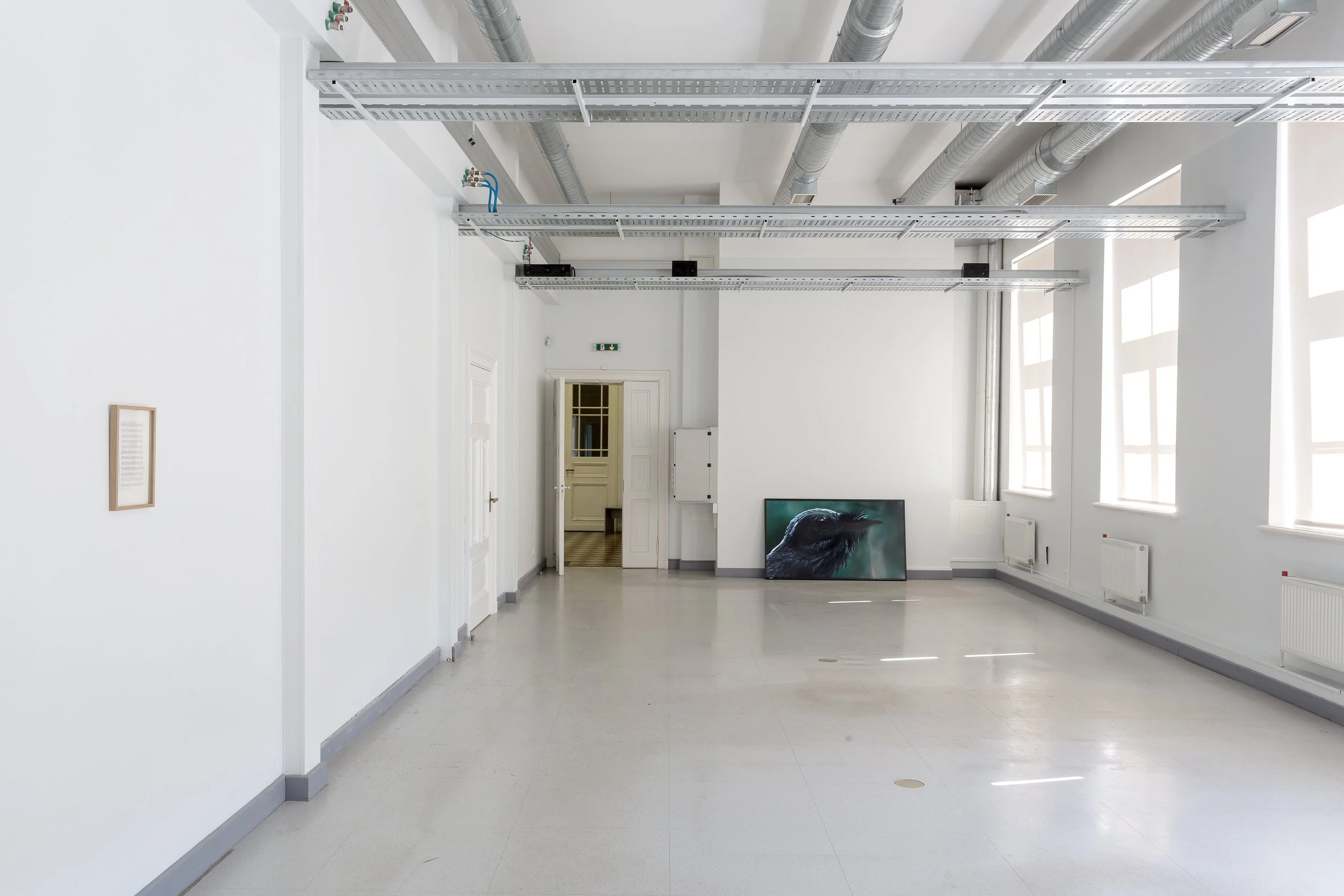
The Keel Row (for solo lyre) consists of a framed piece of manuscript paper with notes to the Scottish folk tune Keel Row written on it by hand. It is meant to be performed with a lyre but for the time being the performance has not been carried out. The musical piece is considered both as the symbols denoting it, i.e. the notes, and as sound, the tune as played. The transitions of Ruscica’s works can occur between various media, be it material, linguistic or even geographic. The lyrebird, which is found wild only in Australia, has been heard to mimic the whole Keel Row tune as played on a flute. This is a transition in which a Scottish-English traditional tune is relocated to the other side of the globe as part of the expressive repertoire of a bird named after a musical instrument.
Ruscica’s works are stratifications of various surrounding realities and the meanings arising from them that reveal the pervasive nature of borrowing and imitation. Do we notice when copying and passing on meanings constructed and formed by others, how information distorted in transitions defines our experience of reality?”
Text written by Rosa Kuosmanen published in ‘30 Works from the Saastamoinen Foundation Art Collection’, 2018.
documentation: Pēteris Vīksna, exhibition view from ‘Everything was forever, until it was no more’ 1st Riga International biennial of contemporary art (RIBOCA1)