Travelogue
16mm film transferred to video, stereo sound, 10 min. and screenprinted collage
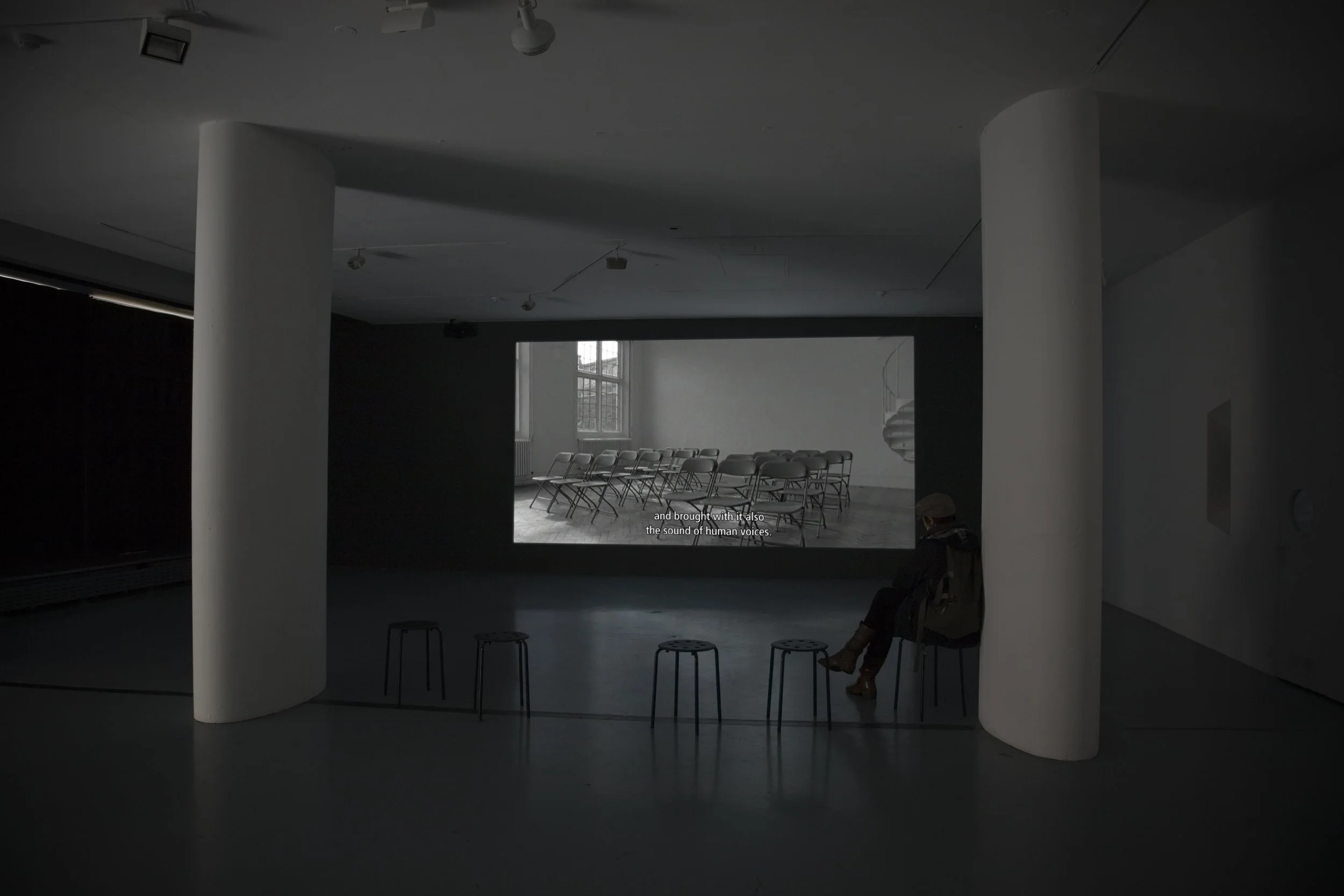
Ruscica approaches their subjects much like an anthropologist or sociologist, posing questions about our very being in the world – who we are, why we are what we are and what it all means. They are interested in places, cultural identities and how we define and communicate personal belonging in an increasingly mono-cultural and global society. Ruscica’s curiosity about locations has led them to develop a practice where residencies have become a fruitful situation for the making of their work. As I write these notes Ruscica is in the process of making their film Travelogue, consisting of three different elements, visual, sound and text, to be filmed and recorded in the Artists’ Studio at Camden Arts Centre. It is a piece that lends itself perfectly to the imagination. But it is also a film about a place, a city, London. How then does one capture a city, represent a city? The title, Travelogue, refers directly to a film genre, embedded with information about travelling in the remote places of the world that became popular in the late 20th century. In the mid 19th century the moving panorama was another appreciated form of entertainment featuring landscapes from journeys to exotic places. Painted sceneries were installed on spools that were rolled past an audience. The machinery was often concealed behind a screen to enhance the illusory effect and a delineator would accompany the imagery, narrating, explaining and dramatising the scenes. Yet Ruscica has filmed a moving panorama screen in black and white creating a screen within the screen where the apparatus, the moving panorama, is the main protagonist.
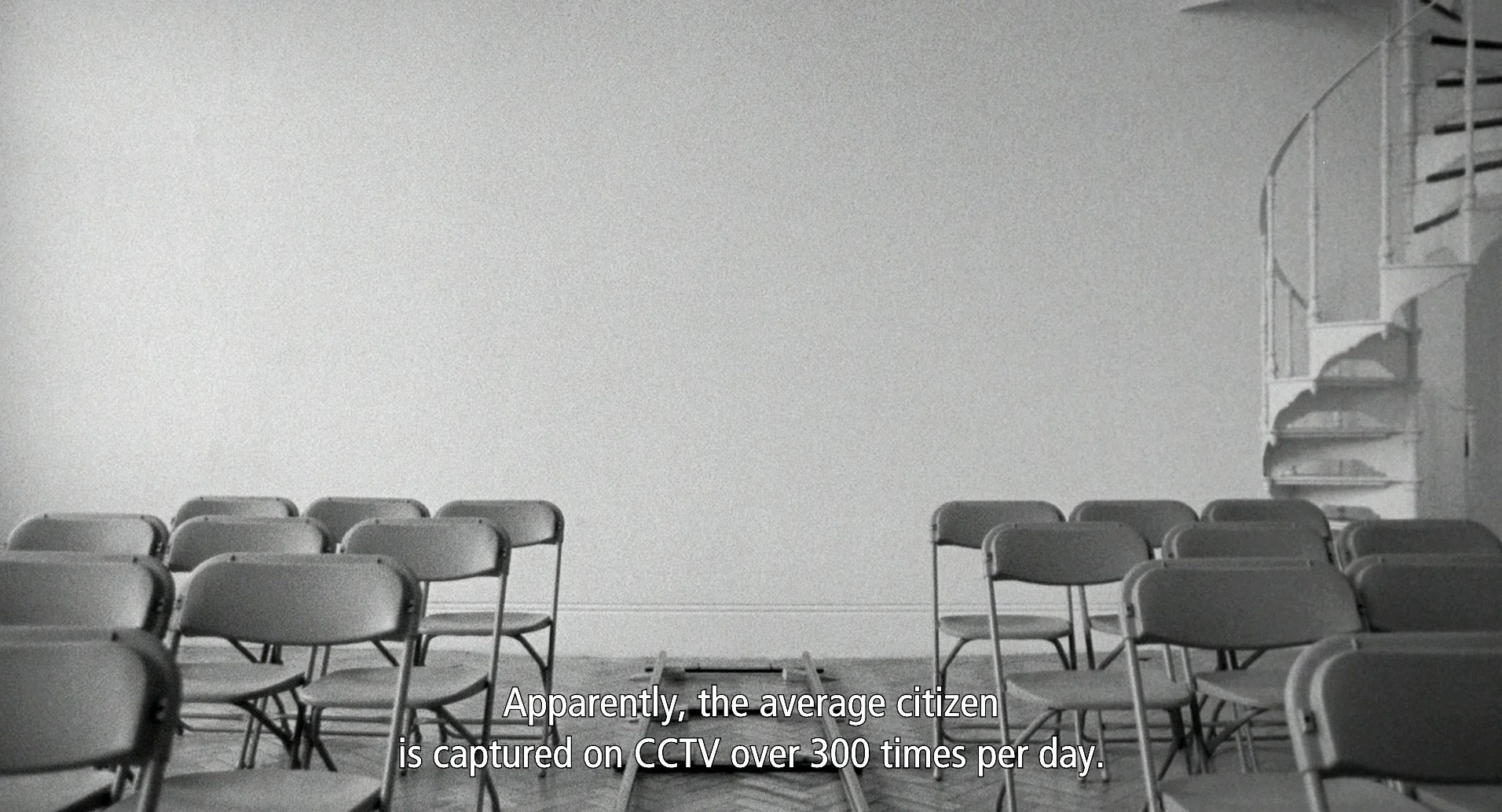
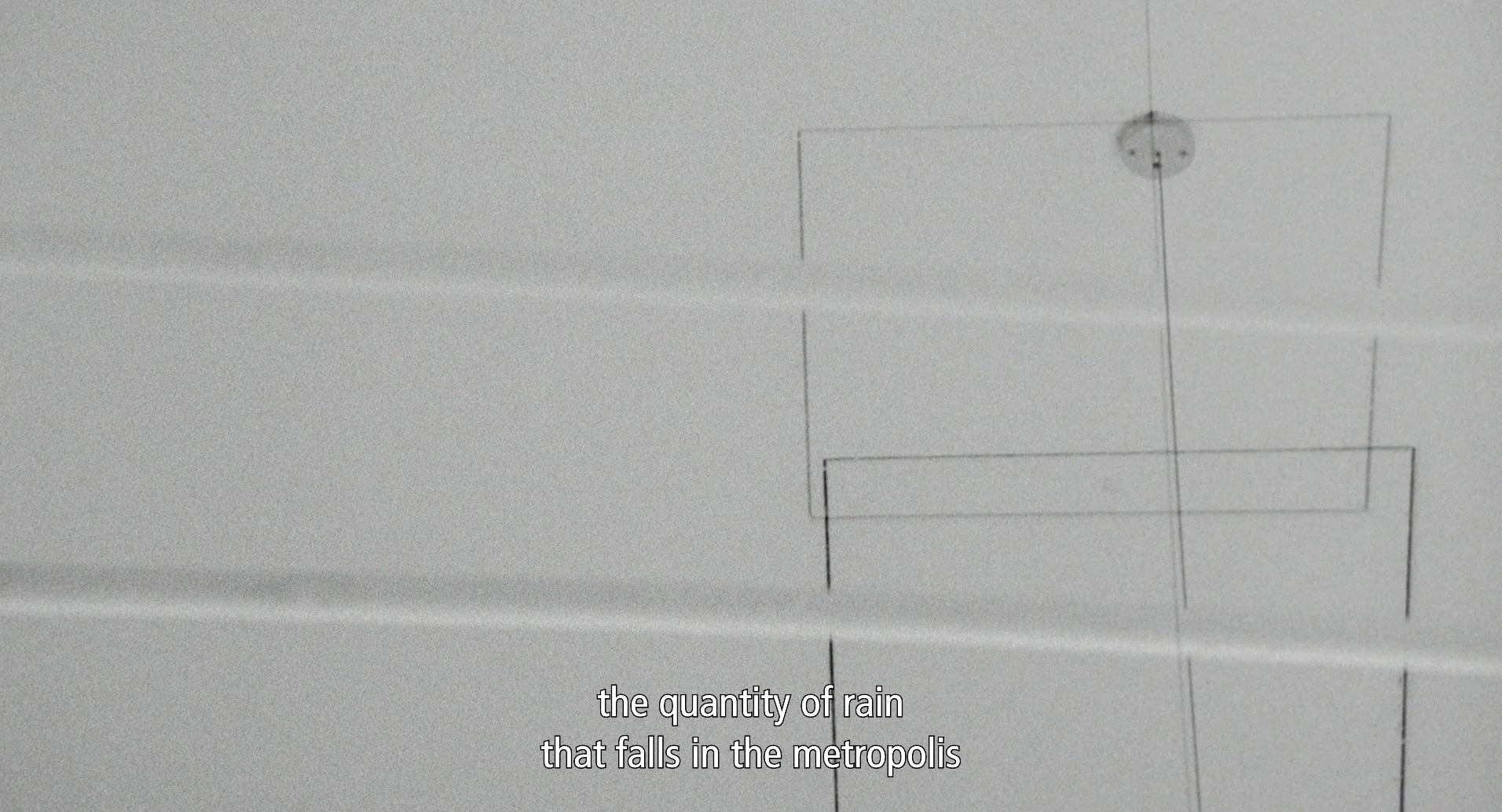
Ruscica’s Travelogue is thus pointing at two historically popular forms within the genre of travel as entertainment – the moving panorama and the travelogue film. But where in both these mediums a landscape would appear and a drama unfold, Ruscica leaves the screen blank. The eye scans the plane in search of something to hold on to, only to encounter the materiality of the surface itself; a roughness in the canvas, a knot in the fabric. In a Brechtian manner, what is staged and dramatised is the technique of staging itself. The lens zooms out providing a view of the whole setting –the blank panorama screen in a studio with a row of empty chairs organised in front of it. The panorama is not providing scenery and the chairs are not holding an audience.
‘The not, as an abrupt intuitive discovery, appears as consciousness (of being), consciousness of the not.’
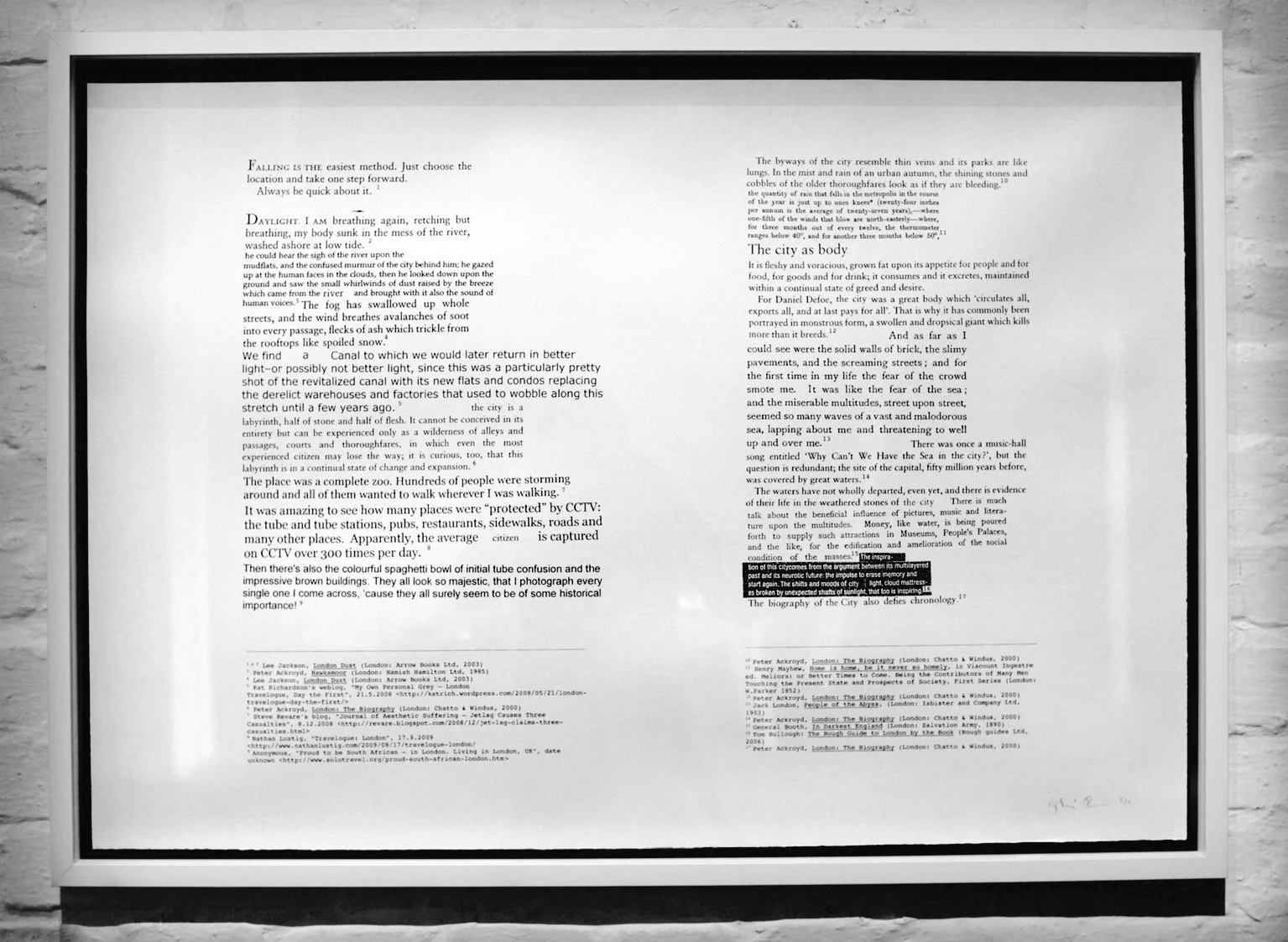
It is the gap, produced by Ruscica’s refusal to provide a window to another world, which allows the viewer to reflect on the function of these objects. Through the use of our experience and knowledge we assign potentiality to the objects – the chairs wait for an audience and the screen for its scenes to begin. The unpopulated visual image is presented in relation to text and sound. The text exists both in the form of a screen print and as subtitles in the film. Interested in existing cultural expressions and representation, Ruscica has decided to select quotes from English travel books as a collectively shared tradition rather than writing their own text. In contrast to the empty visual image the textual collage portrays a city analogous to a body – a city that breathes, is fleshy, dirty, slimy, has moods and so on. The sound, which has been recorded from the studio, provides a more direct and ‘real’ reference to the location. To some the sound might suggest any city, a generic big town, but to the knowing ear it will contain site-specific clues. The piece thus sits in tension between the abstract and the specific. Like a montage, the three elements of the piece, the visual, sound and text, pull in different directions producing gaps where the viewer is invited to reflect on how representation is produced, and to imagine their own city.
written by Malin Ståhl for ‘Jani Ruscica - File Note 49’ published on the occasion of the exhibition ‘Travelogue’ at Camden Art Centre 2010